

FPS Strike Ops : Modern Arena
FPS Shooter & Action Game
I approached FPS Strike Ops: Modern Arena as a mobile adventure shooter first, but what stayed with me was how much the experience depends on whether its fast, competitive presentation fits the way you play. It is a team-based online shooting game from FPS Shooter & Action Game, built around multiplayer matches rather than a slow, story-led journey. That makes it easy to understand when you want a quick action session, although it also means that readability, reaction speed, touch control, and the surrounding play environment matter a great deal.
The game is free to download and aimed at Teen players. It has reached over 100 million installs and holds a 4.6 average from around 204 thousand ratings, which suggests that its basic idea has connected with a very large mobile audience. I would not treat those figures as a guarantee that every player will enjoy it, though. A competitive shooter can feel immediately exciting to one person and tiring or difficult to manage for another, especially when the screen is busy and decisions have to be made quickly.
How the interface feels when every second matters
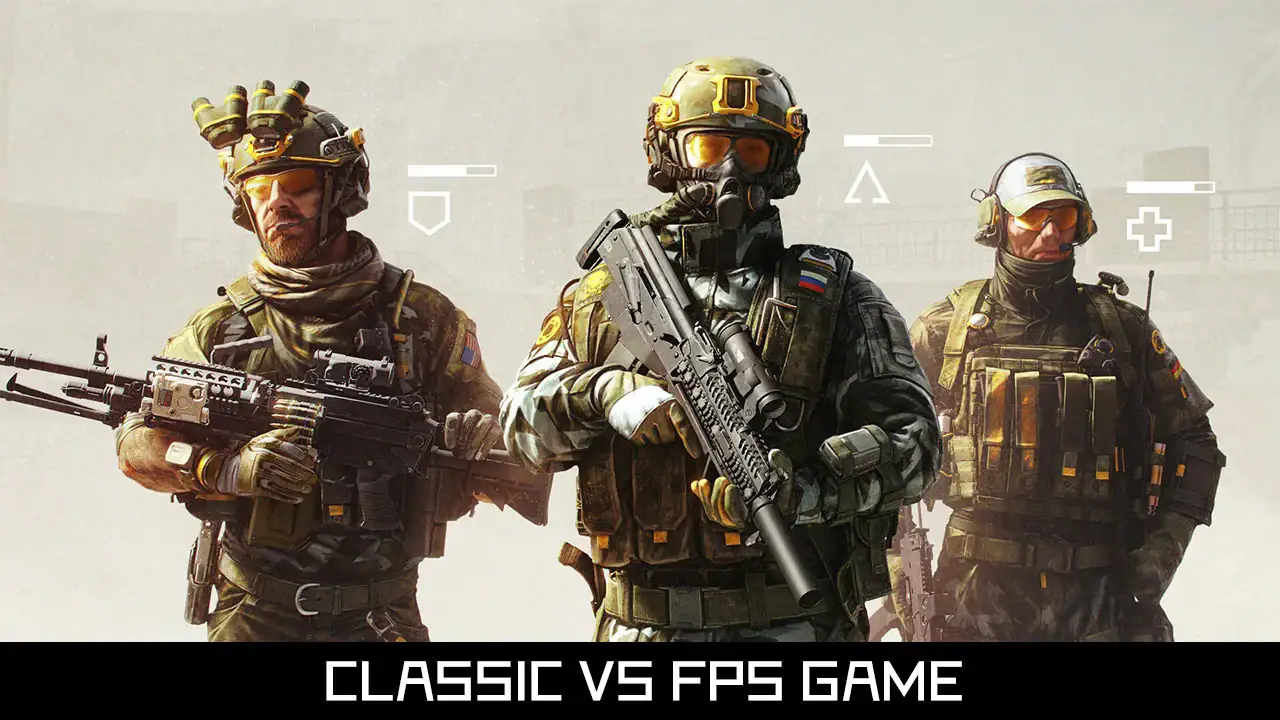
My first concern with a game like this is not simply whether the graphics look impressive. It is whether I can understand what is happening without stopping to decode the screen. In a modern arena shooter, the player is usually dividing attention between movement, aiming, opponents, teammates, objectives, and the edge of the display. That makes clear visual hierarchy more important than decoration. FPS Strike Ops: Modern Arena presents itself as a realistic 3D team shooter, so its appeal comes partly from that action-heavy atmosphere, but the same realism can make a match feel visually dense.
Related News
FPS Strike Ops: Modern Arena - A New Force in FPS Gaming

FPS Strike Ops: Modern Arena – Redefining Mobile FPS Gaming
I found the game easiest to approach when I treated the opening sessions as orientation rather than serious competition. Instead of trying to win immediately, I would use the early play time to learn where the important controls sit and how much of the screen is occupied by combat information. This is a useful habit for anyone who has difficulty reading small elements quickly. Once a match begins, there is little opportunity to pause and reorganize attention, so learning the layout before relying on it is more practical than attempting to adjust during a tense encounter.
Navigation also includes everything around a match. A player should be able to recognize the difference between entering a game, changing a selection, and returning from a result screen without having to rely on hurried tapping. I recommend slower menu exploration when the game is first installed, particularly for younger players or anyone who finds layered touch interfaces confusing. The Teen content rating is a helpful reminder that this is not designed as a calm children’s game; the tone and competitive pressure should be considered before handing it to someone else.
Related News

Why WhatsApp Messenger Still Makes Everyday Communication Feel Easy

Jurassic World: The Game Is the Better Dino Tycoon for Strategic Players

Threads in Real Life: Who Should Join, Lurk, or Leave

How SHEIN Turned Shopping Into an Endless Content Feed

How to Make Fortnite Feel Smarter on Mobile

Should You Switch to Microsoft Outlook on Mobile?
The current version is 1.4.0, and the game requires Android 7.0 or later. Those details make it accessible to a broad range of Android devices, but operating-system compatibility is not the same as a comfortable experience. A phone may run the game while still offering a cramped display, inconsistent touch response, or performance that makes aiming harder. I would judge the game on the actual device rather than assuming that meeting the minimum system requirement means every match will feel equally smooth.
Reading the action without losing the match
For players with reduced visual acuity, the most useful approach is to make the phone environment work in the game’s favor. I would increase system text size where possible, clean the display, and avoid playing under glare. Those changes do not alter the game itself, but they can make small interface elements easier to distinguish. A larger tablet-style screen may also be more comfortable than a compact phone, although a bigger display can require more hand movement and may not suit every player.
Color perception is another practical consideration. Competitive shooters often communicate danger, team identity, and status through visual differences, and those differences may be harder to separate for some players. I would test the game in a low-pressure session and check whether opponents, allies, and important indicators remain distinguishable without depending on color alone. If the screen becomes a blur of similar tones, this is a serious limitation rather than a minor cosmetic issue, because identifying the wrong target can affect the entire team.
Gallery
Players who experience motion sensitivity should also pay attention to how the camera movement feels during ordinary play. Rapid turns, close combat, and visual effects can be more tiring than expected. I would begin with short sessions, keep the phone at a stable viewing distance, and stop before discomfort builds. A game that is enjoyable for fifteen minutes may not be suitable for a long evening, and that distinction is especially important here because the multiplayer format encourages one more match.
Touch control, reaction speed, and different ways of playing
The central physical challenge is obvious: this is an action game that asks for simultaneous movement, aiming, observation, and quick decisions. Players with limited dexterity, tremor, joint pain, or one-handed use may find that the standard mobile shooter rhythm creates friction. Even when the controls are understandable, the need to perform several gestures in a small area can make accuracy inconsistent. I would not recommend judging yourself by competitive results during the first sessions; the question is whether the control demands remain manageable after practice.
A practical workaround is to hold the phone in the position that creates the least strain and to use shorter sessions rather than forcing a long grip. Some players will prefer landscape play with both hands, while others may need to rest the device and use a lighter touch. The trade-off is that a more stable setup can reduce fatigue but may make rapid repositioning less natural. I would experiment before spending anything, because the game is free to start and the most important purchase decision is whether the physical interaction suits you at all.
Players with slower reaction times can still enjoy the game, but I would set expectations carefully. A competitive team shooter rewards immediate responses, and a player who needs more time to process a crowded scene may feel pressured even when they understand the objective. The better use case is casual participation, learning the maps and rhythm, and treating improvement as the goal rather than measuring every session by victories. If you want a relaxed adventure with generous time to explore, a slower single-player game would probably be a better fit.
Voice, sound effects, and visual movement may all contribute to awareness during a match. Players who are deaf or hard of hearing should consider how much information can be obtained visually, especially when an audio cue might normally warn of nearby action. I would play a few rounds with sound muted or reduced and notice whether the screen still gives enough context to make decisions. Players who are sensitive to loud or sudden audio can do the reverse by lowering the volume and using a quieter environment. That may reduce immersion, but comfort matters more than cinematic intensity.
Using the game in real situations, and where it still falls short
One realistic scenario is a short break during a commute or between appointments. The free entry point makes it easy to try without planning a purchase, and a multiplayer shooter can provide a focused burst of activity when I have only a little time. However, I would avoid starting a serious match when the connection, surroundings, or available attention are uncertain. A crowded train, a bright outdoor bench, or a phone held awkwardly can turn an exciting round into a frustrating one. This is a game for an intentional pocket of attention, not something I would automatically recommend for every spare minute.
It can also work well as a shared activity with friends who already enjoy mobile shooters. Team play gives the experience a social reason to return, and coordinating with familiar people may feel less intimidating than entering a competitive environment alone. At the same time, the online format means the quality of a session can depend on teammates, opponents, and the stability of the surrounding play conditions. Anyone seeking a predictable solo routine should compare it with an offline adventure game instead of assuming that the adventure label means a self-paced campaign.
The usual alternative in this category is a slower action-adventure title with exploration, puzzles, or a stronger single-player structure. That kind of game is generally more forgiving when vision, reaction speed, or hand movement varies from day to day. FPS Strike Ops: Modern Arena is the better choice when the appeal is direct team competition and the satisfaction of improving at fast encounters. It is the weaker choice when you want a quiet story, adjustable pacing, or a game that can be enjoyed without depending on other players.
There is also a financial trade-off worth considering. The game costs nothing to download, but optional in-app purchases range from $0.99 to $99.99 per item. I would approach that range with a clear personal rule: play enough to decide whether the core experience is enjoyable before considering any purchase, and never treat spending as a solution to a control or comfort problem. A purchase cannot make a visually crowded match easier to read or remove the physical demands of aiming. For families, the Teen rating and the presence of paid items are both reasons to discuss expectations before play.
Another useful habit is to review your own fatigue rather than only your performance. If I notice that I am gripping the phone tightly, leaning toward the screen, or repeatedly missing information because I am rushing, I take that as a sign to stop or change the setup. This is more valuable than chasing a better result while uncomfortable. For players with fluctuating energy, the game may be enjoyable in short, planned sessions but unsuitable as an all-day activity. The competitive design naturally encourages continuation, so setting a stopping point in advance can protect the experience.
Players should also think about social pressure. Team games can be motivating, but they can become stressful when a player feels responsible for everyone else’s result. Someone who is new to shooters, uses slower movements, or needs frequent breaks may prefer a more forgiving community and a less demanding format. I would recommend trying the game with friends who understand those needs rather than using the first difficult public match as the final judgment. If the social side consistently makes play unpleasant, a solo alternative is not a failure; it is simply a better match for the player.
Accessibility in practice is therefore a combination of the game’s interface, the device, the player’s abilities, and the situation. A large screen, stable posture, moderate volume, good lighting, and short sessions can make the experience more approachable. None of those adjustments changes the fact that the game is built around rapid multiplayer shooting. They only help determine whether that design can be used comfortably. I would be cautious about recommending it to someone who needs extensive control remapping, highly adjustable pacing, or guaranteed noncompetitive play, because those needs sit outside the game’s main identity.
My final view is positive but specific: FPS Strike Ops: Modern Arena is worth trying if you want a free, fast team shooter and your device and playing setup let you follow a busy screen comfortably. Its large audience and strong average rating show broad appeal, while the 1.4.0 release gives Android users on version 7.0 or newer a straightforward entry point. I like its directness and the way it turns a phone into a compact competitive arena, but I would not call it universally inclusive simply because it is available on many devices.
The most important question is not whether the game is popular, but whether its speed, touch demands, visual density, and online pressure fit you. Try it during a calm session, test it with sound adjusted to your needs, check whether you can identify the important action without strain, and stop if the physical controls become uncomfortable. For players who enjoy that rhythm, it can be an engaging mobile adventure shooter. For anyone needing slower pacing, extensive flexibility, or a more predictable solo experience, another type of game will likely be the kinder and more satisfying choice.
FAQs for FPS Strike Ops : Modern Arena
What are the main features of FPS Strike Ops: Modern Arena?
FPS Strike Ops: Modern Arena is a thrilling first-person shooter game featuring realistic graphics, diverse weaponry, and intense multiplayer battles. Players can customize their loadouts, engage in various game modes, and experience dynamic environments. The game also offers regular updates, ensuring new content and challenges for players.
Is FPS Strike Ops: Modern Arena free to play?
Yes, FPS Strike Ops: Modern Arena is free to download and play. However, it includes in-app purchases that allow players to buy additional items, skins, and upgrades. While these purchases can enhance gameplay, they are entirely optional, and players can enjoy the core experience without spending money.
What are the system requirements for FPS Strike Ops: Modern Arena?
For Android, the game requires a minimum of Android 5.0 and at least 2GB of RAM. For iOS, it supports devices running iOS 11.0 or later. A stable internet connection is needed for multiplayer modes. It's advised to have ample storage space to accommodate future updates and ensure smooth gameplay.
Does FPS Strike Ops: Modern Arena support multiplayer modes?
Absolutely, FPS Strike Ops: Modern Arena offers robust multiplayer modes, including team deathmatch and capture the flag. Players can join or create clans, compete in ranked matches, and participate in special events. The game’s matchmaking system ensures balanced and competitive gameplay experiences.
Are there any age restrictions for playing FPS Strike Ops: Modern Arena?
Yes, FPS Strike Ops: Modern Arena is rated for players aged 16 and over due to its realistic violence and intense action. Parents are advised to review the game’s content and features to ensure it aligns with their standards and decide if it is suitable for younger audiences.
Pros
- Intuitive controls enhance gameplay.
- High-quality graphics and effects.
- Wide variety of weapons available.
- Smooth performance on most devices.
- Engaging multiplayer mode.
Cons
- In-app purchases can be pricey.
- Occasional ads disrupt immersion.
- Limited offline play options.
- Requires stable internet connection.
- Some maps feel repetitive.


